Quinoa
What's New and Beneficial About Quinoa
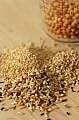
- The Food and Agricultural Organization of the United Nations (FAO) has officially declared that the year 2013 be recognized as "The International Year of the Quinoa." Proposed by the government of Bolivia and receiving strong support from many Central and South American countries, quinoa has now been singled out by the FAO as a food with "high nutritive value," impressive biodiversity, and an important role to play in the achievement of food security worldwide. We realize that quinoa remains unfamiliar to many people, especially in the practical sense of cooking and recipes. But we hope that situation will change, given the remarkable nature of this easily-prepared, nutrient-rich food.
- Researchers have recently taken a close look at certain antioxidant phytonutrients in quinoa, and two flavonoid—quercetin and kaempferol—are now known to be provided by quinoa in especially concentrated amounts. In fact, the concentration of these two flavonoids in quinoa can sometimes be greater than their concentration in high-flavonoid berries like cranberry or lingonberry.
- Recent studies are providing us with a greatly expanded list of anti-inflammatory phytonutrients in quinoa. This unique combination of anti-inflammatory compounds in quinoa may be the key to understanding preliminary animal studies that show decreased risk of inflammation-related problems (including obesity) when animals are fed quinoa on a daily basis. The list of anti-inflammatory phytonutrients in quinoa is now known to include: polysaccharides like arabinans and rhamnogalacturonans; hydroxycinnamic and hydroxybenzoic acids; flavonoids like quercetin and kaempferol; and saponins including molecules derived from oleanic acid, hederagenin and serjanic acid. Small amounts of the anti-inflammatory omega-3 fatty acid, alpha-linolenic acid (ALA), are also provided by quinoa.
- In comparison to cereal grasses like wheat, quinoa is higher in fat content and can provide valuable amounts of heart-healthy fats like monounsaturated fat (in the form of oleic acid). Quinoa can also provide small amounts of the omega-3 fatty acid, alpha-linolenic acid (ALA). Given this higher fat content, researchers initially assumed that quinoa would be more susceptible to oxidation and resulting nutrient damage. However, recent studies have shown that quinoa does not get oxidized as rapidly as might be expected given its higher fat content. This finding is great news from a nutritional standpoint. The processes of boiling, simmering, and steaming quinoa do not appear to significantly compromise the quality of quinoa's fatty acids, allowing us to enjoy its cooked texture and flavor while maintaining this nutrient benefit. Food scientists have speculated that it is the diverse array of antioxidants found in quinoa—including various members of the vitamin E family like alpha-, beta-, gamma- and delta-tocopherol as well as flavonoids like quercetin and kaempferol—that contribute to this oxidative protection.
Nutrients in
Quinoa
42.50 g (42.50 grams)
Quinoa
42.50 g (42.50 grams)
Nutrient%Daily Value
manganese43%
tryptophan21.8%
magnesium20.9%
folate19.5%
phosphorus19.4%
Calories (156)8%
This chart graphically details the %DV that a serving of Quinoa provides for each of the nutrients of which it is a good, very good, or excellent source according to our Food Rating System. Additional information about the amount of these nutrients provided by Quinoa can be found in the Food Rating System Chart. A link that takes you to the In-Depth Nutritional Profile for Quinoa, featuring information over 80 nutrients, can be found under the Food Rating System Chart.
Overall Nutrient Richness
Perhaps the most striking health benefit provided by quinoa is its overall nutrient richness. When the nutrient composition of this food is analyzed in depth, the results are unusual and striking. While quinoa can be eaten in the same way as a grain, or ground into flour like is so commonly done with grains, it lacks some important nutritional shortcomings of grains.Neither quinoa nor any grains qualify as good vitamin E sources in our WHFoods rating system. However, in the case of quinoa, or rating system does not do full justice to the fact that quinoa contains significant amounts of certain tocopherols (vitamin E family members) largely absent from most grains. For example, one cup of quinoa provides 2.2 milligrams of gamma-tocopherol—a form of vitamin E that has been more closely associated with certain anti-inflammatory benefits in health research. Quinoa is also a good source of RDA nutrients like folate, copper, and phosphorus in contrast to whole wheat, which does not qualify as a good source in our rating system.
Posted by:Georgie
Credit: whfoods.com


No comments:
Post a Comment